Before I state my reasons for this commentary, I wish to emphasize my regard for the Indigenous people of this country. Canada is fortunate to have, as a core characteristic of its identity, the Indigenous people in our population. In my formal career as a research scientist, I have repeatedly been taken under the wing of Indigenous people and introduced to their identity. One of these I count as my best friend, with whom I am working to document his 86 year-long life. It is against these experiences that I draw attention to some of the discords that have been developing for some time.
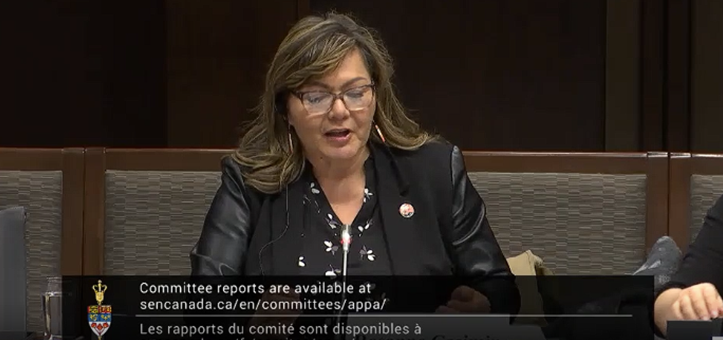
Chief Casimir, in her March 25, 2026 statement before the Senate Committee on Indigenous Peoples, seems bent on prolonging indefinitely a very ill-defined process of assuaging what is actually the myth of the 215 child burials claimed to have been found at the Kamloops school. Not only did her May 27, 2021 press release precipitate the church arsons and a Parliamentary declaration of Canada as a purveyor of genocide, but it has also emboldened Indigenous administrations to take on a measure of political control far out of proportion to the Indigenous segment of BC’s population.
The above outcomes are completely undeserved or unsustainable. The residential school narrative, bolstered by the Kamloops graves, has been applied as a guilt burden on the Non-indigenous to secure a limitless source of money transfers. How can this financial basis be expected to remain palatable to the rest of the BC population? How can promoting victimhood help Indigenous people counter the disadvantages that they are claimed to be subject to? In January, I was guiding a dozen Tahltan teens through the Association for Mineral Exploration’s trade show, letting them see for themselves the opportunities in natural resources. In Oxford House, Manitoba, I’ve worked with teens who aspire to engineering but are intimidated by the jump to the university lecture hall. These are people who seek to join the modern economy. Wouldn’t helping Indigenous members prepare for careers be more helpful than the never-ending promotion of victimhood?
Yes, the initiation of the residential school era was, by today’s standards, an arrogant and assimilationist measure. But it was not genocidal. That word, and other superlatives favoured in the standard narrative, have been so bandied about as to render them meaningless. Those claiming Canada as a purveyor of genocide should, as a start, refer to Major Romeo Dallaire’s Shake Hands with the Devil to recalibrate their understanding of what constitutes a genocide.
Almost equally offending is the use of the word ‘denialist’ to identify those advocating a balanced account of the residential school era. In no published or spoken account have these authors or spokespeople denied harms. I, as a Non-indigenous, experienced the tail end of the corporal punishment era of school discipline. Verbal abuse and beatings I received were minor compared with some of my colleagues. The point here is that abuse was not unique to Indigenous. That said, there is no question residential school students were removed from their cultural environment. But with that recognition must follow the question: what if the Indigenous had been ignored? World history is a litany of ethnic displacements. Just read Jean-Pierre Filiu’s almost 1,500 year-long toing and froing account in his ‘The Middle East’. Is it realistic to expect that the European influx would not displace the Indigenous? Yet they were offered accommodation in a manner that was not intended as a genocide.
It is not possible for me to accept that the residential school experience for the Indigenous was a wholesale tragedy. When I look through the photographic archives on websites provided by the TRC, IRSDC, The National Archives, etc., I find an Indigenous Air Cadet squadron, a teacher writing in syllabics, kids erecting a bush camp on school grounds, kids preparing a display of Indigenous clothing, I could go on and on. Just read one chapter, A Saga of Terrible Abuses. Really? from Dead Wrong and find example after example of Indigenous advocates for schools, improved health outcomes for Indigenous and succour for Indigenous orphans. And yet we have a Member of Parliament proposing legislation to render such observations illegal. Suppressing historical knowledge will only promote the victim narrative.
The truth and reconciliation exercise will never succeed as long as Indigenous and Non-indigenous subscribe to the victimhood narrative. The searches for graves is perhaps the most blatant distraction being used to prolong this narrative. How can spending 100s of millions of dollars relocating forgotten cemeteries advance Indigenous interests? This work has never advanced beyond identification of ground penetrating radar soil responses that could have any one of a dozen possible explanations.
My indigenous friend has given me months of experience in the bush. He can light a fire without matches and fashion a fish net with willow roots. He befriends any tourist curious enough to speak with him. My friend is an ambassador for his culture. Recently he confided that some investigators were coming to ask him about his residential school experience. He said to me, “I don’t think I am going to be telling them what they want to hear.” Recently, I heard about a collaboration between the Royal Winnipeg Ballet and a First Nation choreographer, the result: traditional storytelling showcased in a way that emphasizes the place of First Nations culture in Canada as seen by ourselves and the world.
The above are people who have left the victimhood narrative behind. Indigenous leaders who truly wish to advance the wellbeing of their members might consider doing the same.